العربية


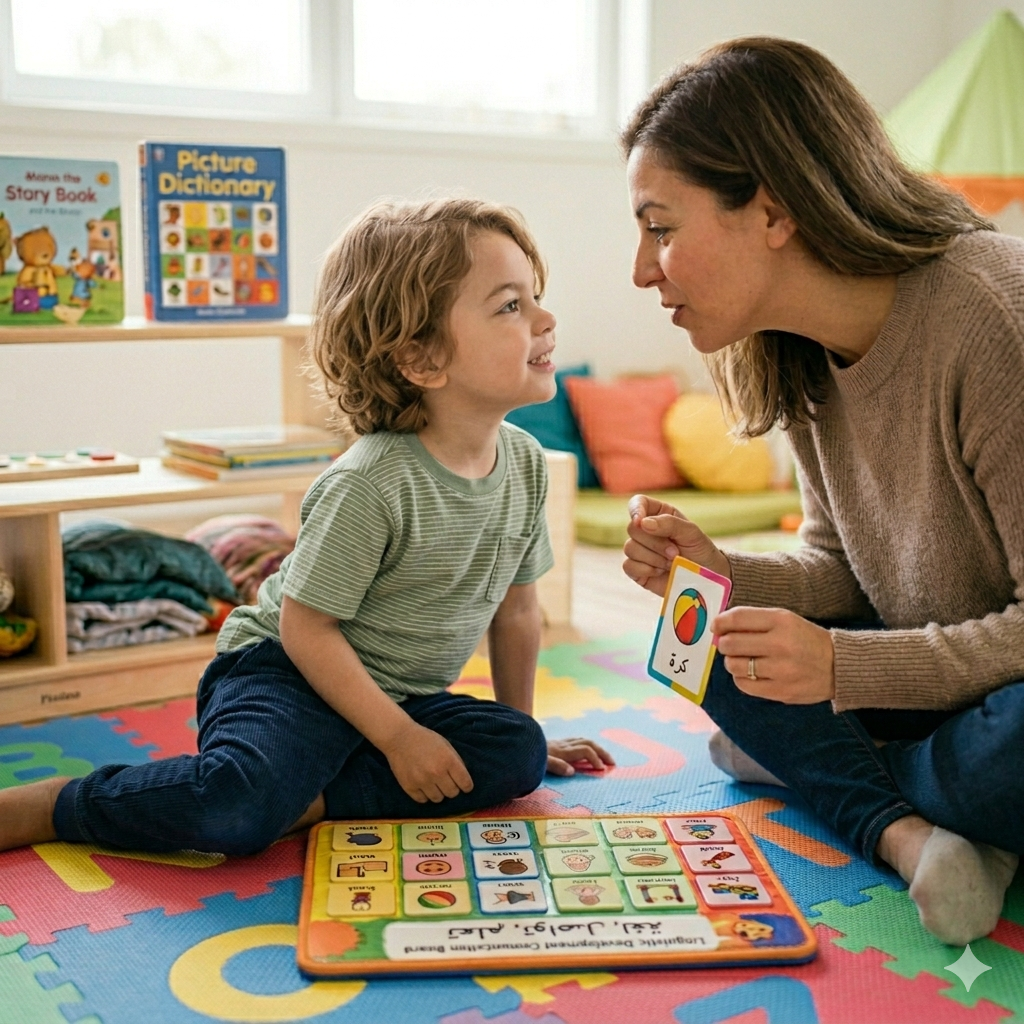
Remember the first time your baby looked at you and said "mama"? Even if it came out as "mamamama" with no real meaning yet — your heart melted completely.
That moment was the beginning of one of the most powerful journeys your child will ever take — learning to communicate with the world around them.
Communication and language development is how your child learns to understand and express themselves. It covers two equally important sides:
Receptive language — what your child understands. Following instructions, recognizing their name, understanding simple questions. This always develops before expressive language.
Expressive language — what your child can say or show. Words, sentences, gestures, facial expressions, and even pointing. This is how they tell you what they need, think, and feel.
Language is not just about talking. It is about connection — and it starts from day one.
Here's something that surprises many parents — language development is directly linked to almost every other area of growth.
Children with strong language skills show better cognitive development, stronger social and emotional skills, and are significantly more prepared for school. Research shows that children who are exposed to rich language in their early years have larger vocabularies, better reading abilities, and stronger problem-solving skills later in life.
Every word you say to your child today is an investment in their entire future.
check your child assessment when you make child account
Every child develops at their own pace — and that is completely normal. But if you notice any of the red flags for every age, it is worth a conversation with a developmental specialist.
Red flags are adapted from CDC and AAP developmental warning signs. If any of these are present, we recommend sharing this report with a developmental pediatrician to guide you on next steps.
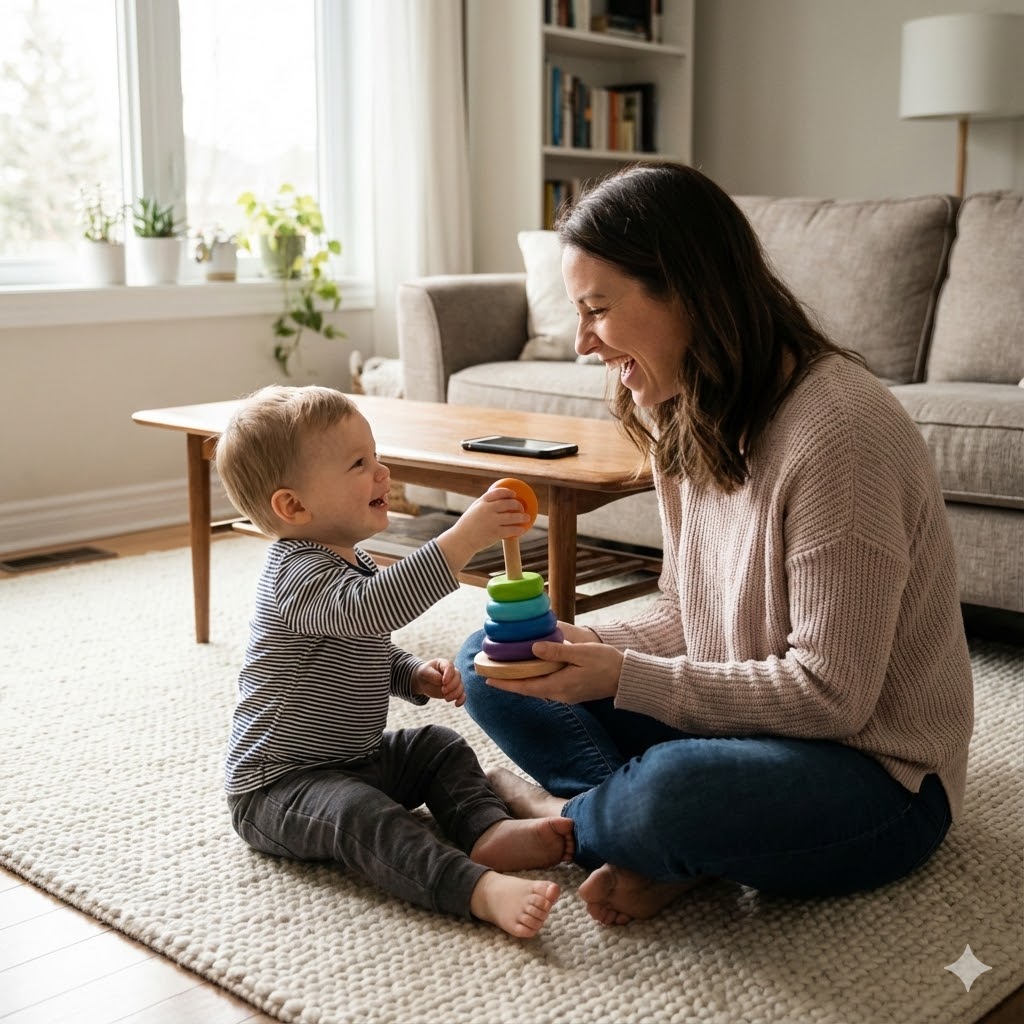
You are already your child's best language teacher — you just might not know it yet. Here is how to make the most of every day:
Every bedtime story, every silly song, every conversation at the dinner table — you are building your child's language one word at a time.
It doesn't require perfection. It just requires presence, warmth, and a little bit of intention every single day.
That's what Discover20 is here for — one simple, expert-guided 20 minutes at a time. 💛

.png)
.png)
.png)
.png)
.png)
.png)